
Introduction
I have updated this post on how to de-hull black-eyed peas, step-by-step. It was originally uploaded in 2014, but since then I have learned a whole lot more about beans, black-eyed peas, and their spectrum of beans from the cowpea family. I thought it deserved a proper update in August 2026.
If venturing into the territory of peeling beans, I recommend doing this a couple of days in advance so the process isn’t too laborious. Do a whole bunch, then pack and freeze what you don’t need for another time.
This was originally posted as the akara chronicles with a bunch of photos for a thing I should have updated later. It has taken me about 12 years, haha. I now have a fully updated post on how to make akara and this comprehensive post on how to prepare the beans beforehand.
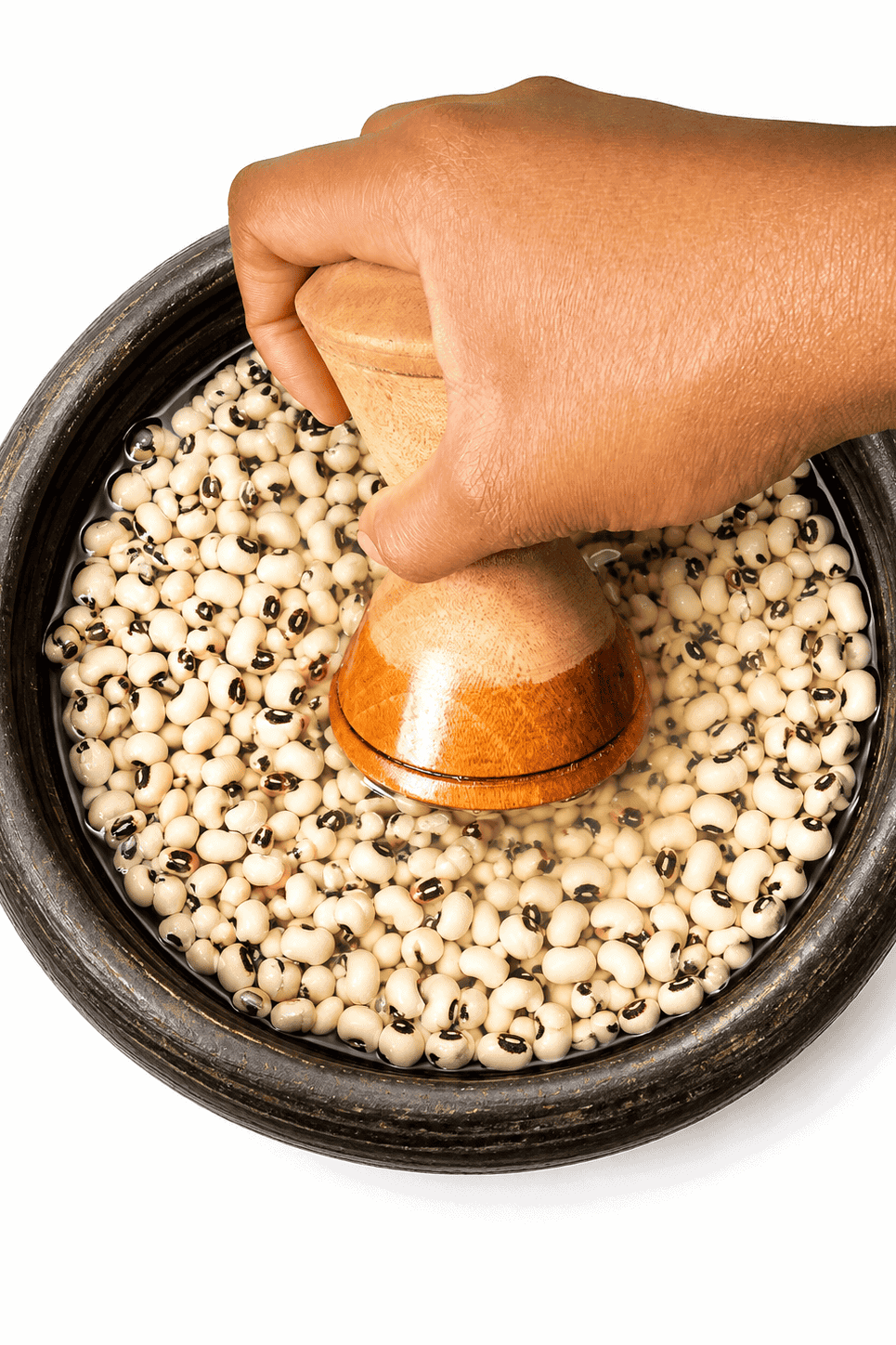
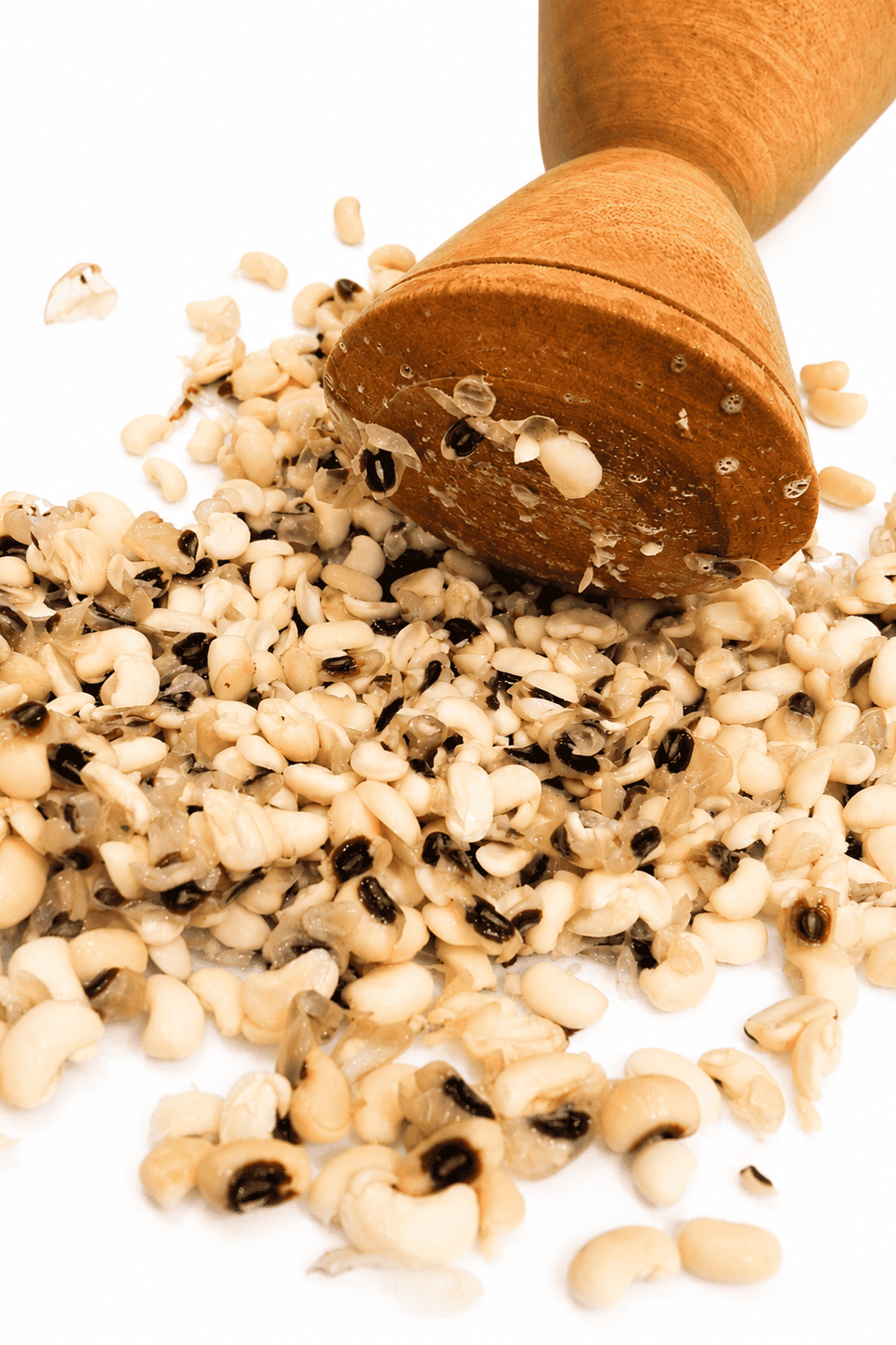
When I first attempted this, I tried rubbing the skins off the beans by hand, and after 30 seconds I was afraid I would be there all day. Quite thankfully, I called upon age-old or modern technology to address any “working momma don’t want no kitchen drama” moments. A traditional Ghanaian blender known as a kaaa, was a lifesaver. It is similar to a pestle and mortar. However, it is wide, with its surface covered in small pointed nodes to create a high-friction surface. In the absence of these, agitate sparingly in a food processor, then float away the skins in water.
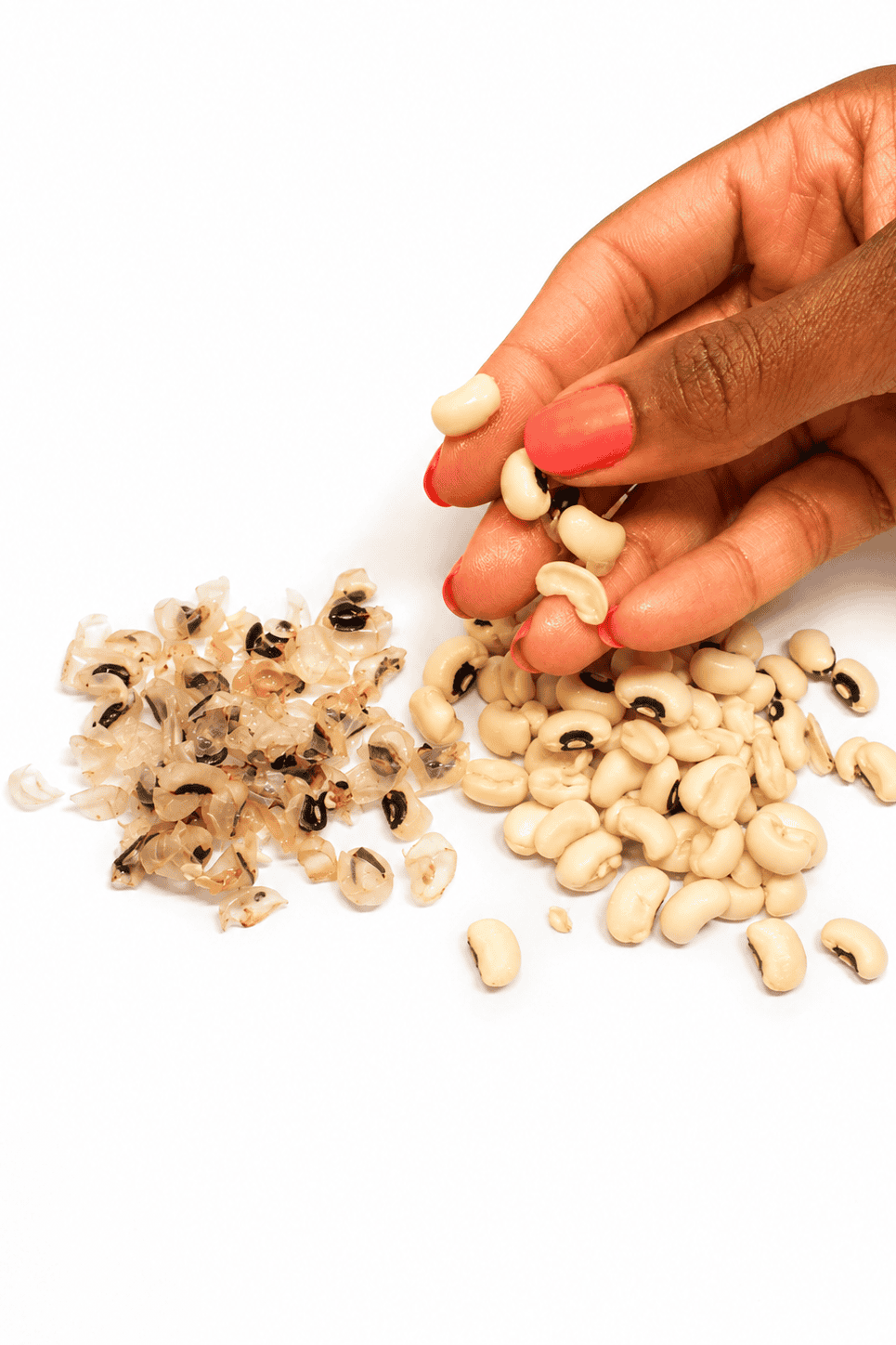
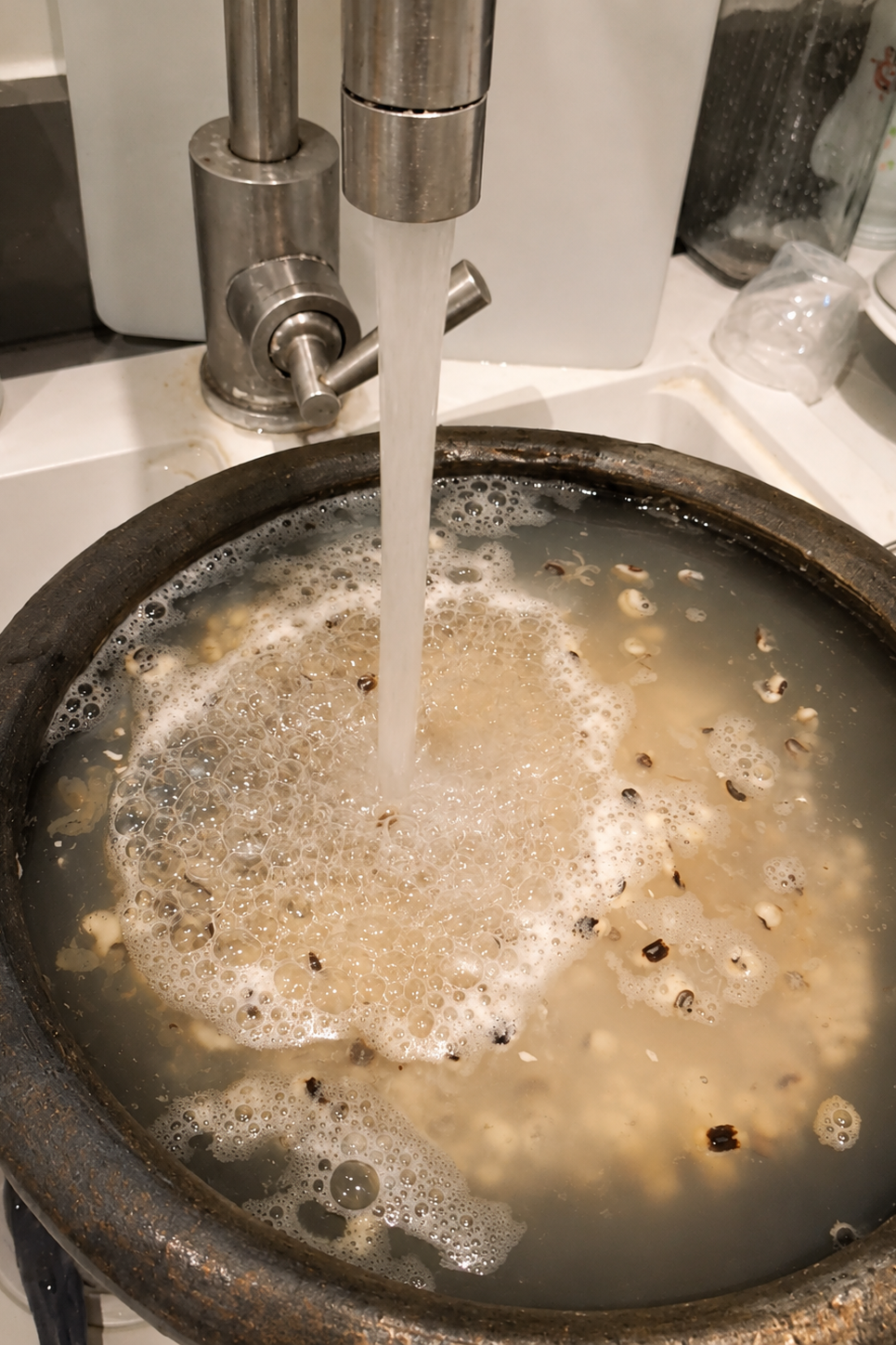
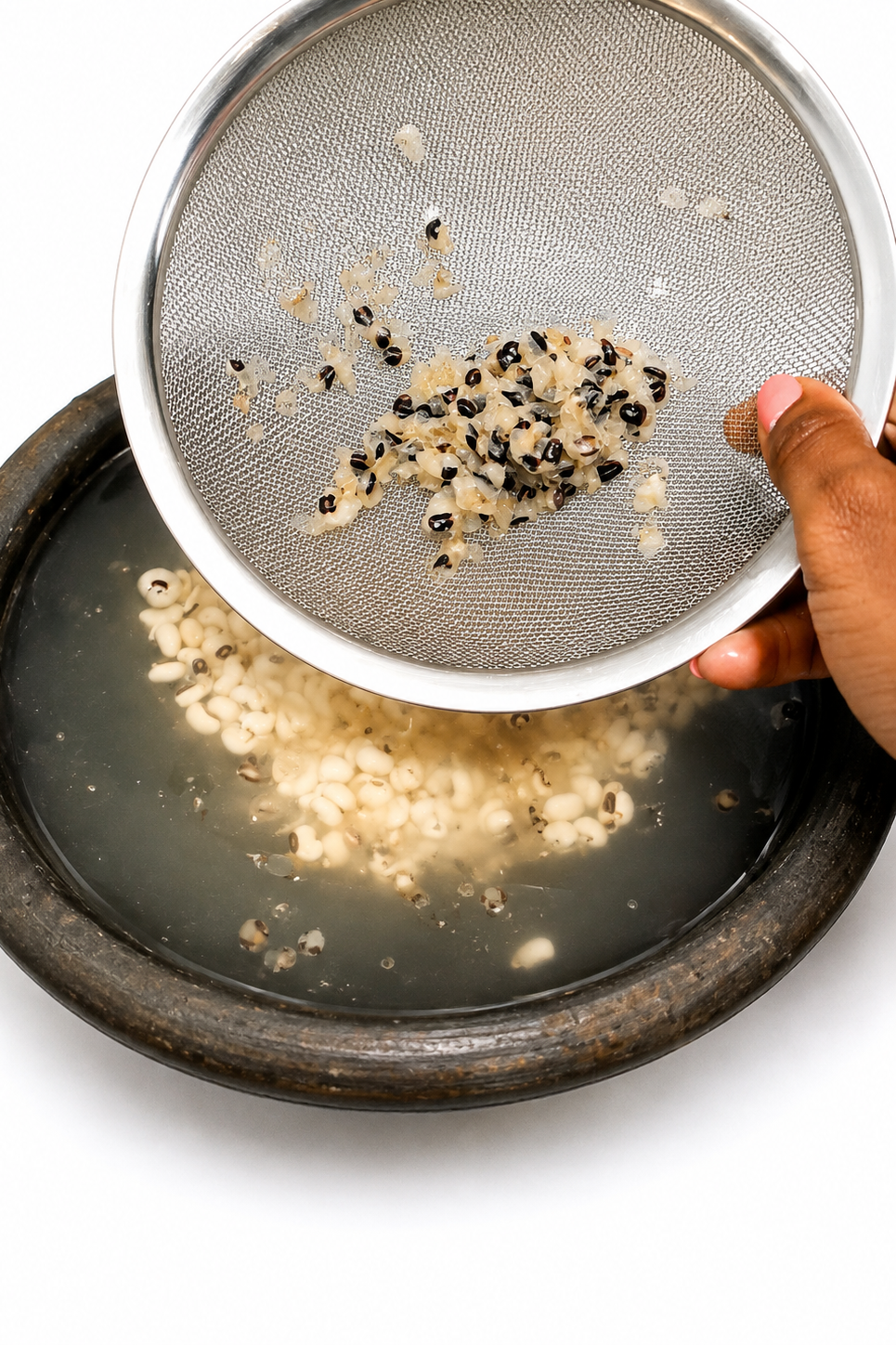
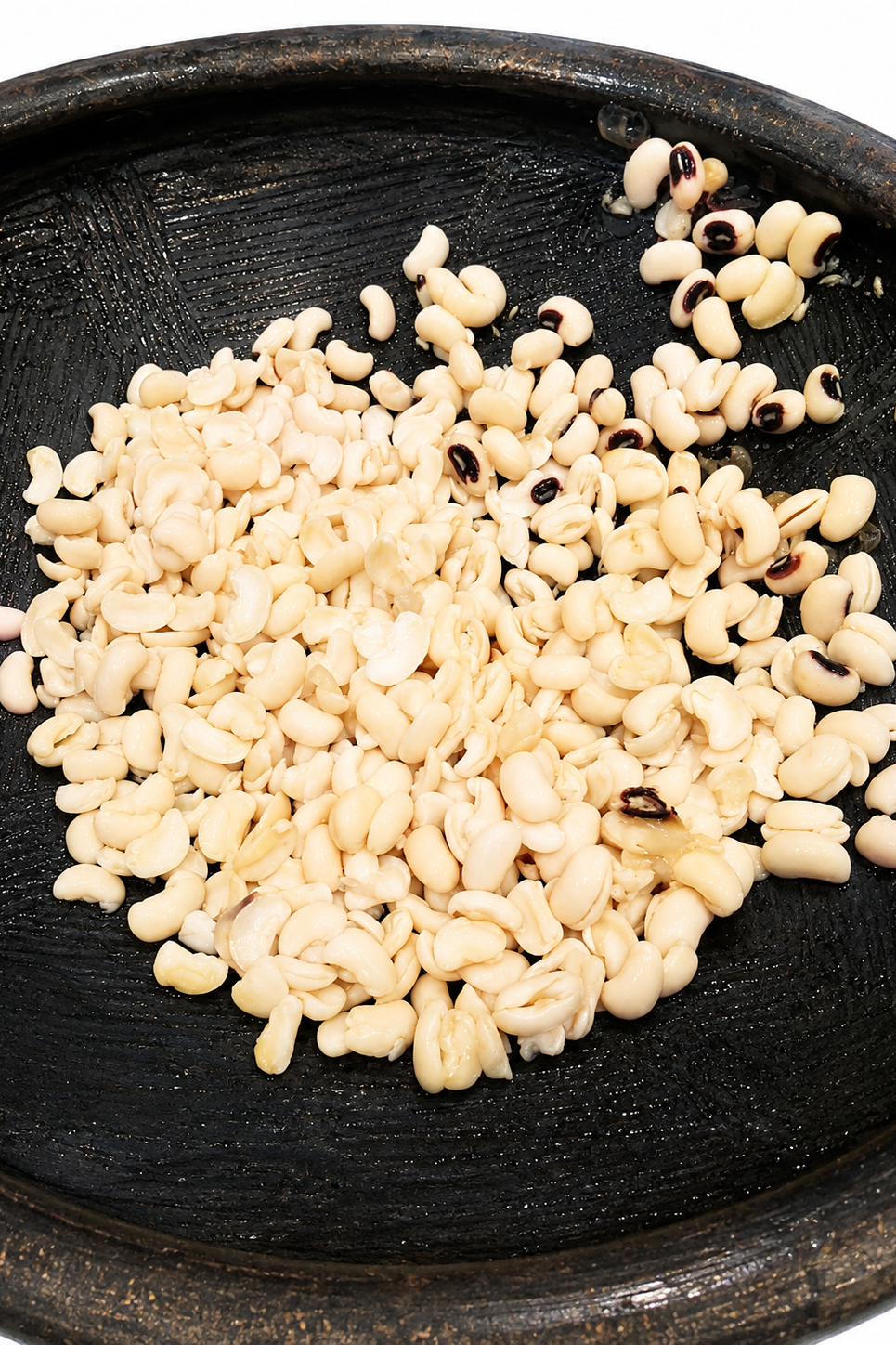
I agitated the soaked beans enough to loosen the hulls. I then used scientific methods often employed in mining operations to separate the outer skins from the beans. Voila! Pearl coloured #plantpower goodness. This process requires patience, though. The resulting pearly white flesh of the beans is breathtaking. You can also go ahead and use the beans whole, with the hull. It is much healthier; however, it may alter the smooth texture of the paste.
If you simply can’t be bothered, like any other normally busy human being who realises life is too short to peel beans, you can buy them already de-hulled here. Yes, I am an affiliate link 😁.
Tumblr blurb. http://ow.ly/2ILCO7
What I have Learned About Peeling Beans Over the Years
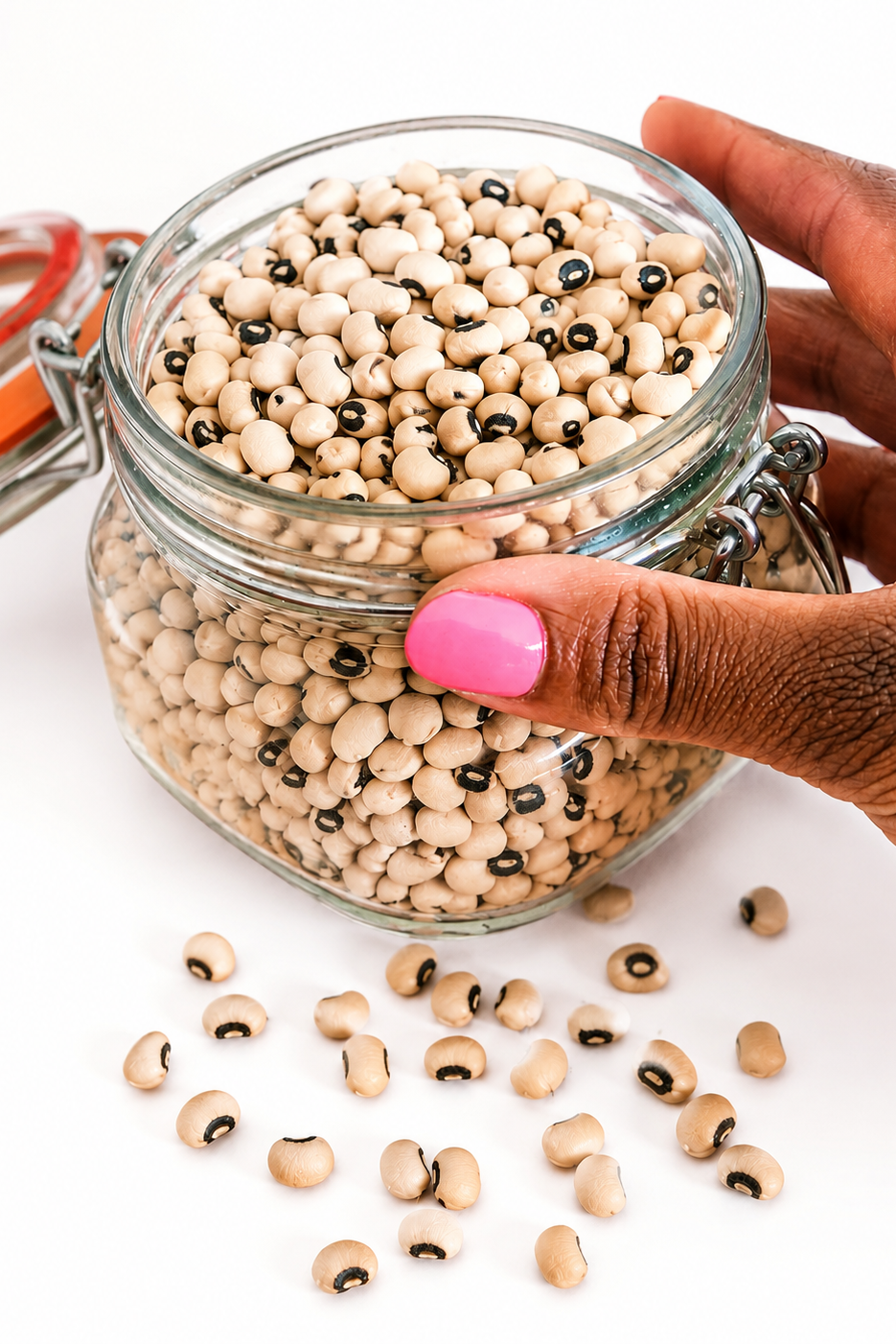
A lot. Particularly the fact that not all beans are equal. Firstly, black-eyed peas are much larger than the beans we are used to seeing in Africa, particularly in Nigeria, where I have learned a little more about beans than I knew before. The beans commonly used for akara, moinmoin, gbegiri and other bean dishes are called oloyin beans or ewa oloyin in Yoruba.
These are commonly known as brown beans or honey beans, and they can come in different shades of brown. They most certainly live up to their name in the sense that they are a sweet and creamy variety of cowpeas, and yes, I prefer them to black-eyed peas. If I understand what I have read correctly, oloyin means honey, honey seller, or “sweet like honey” in Yoruba.
Oloyin Beans Need Less Soaking Time
Oloyin beans are different from cowpeas in the sense that they do not require much soaking at all before peeling. In fact, if you soak them for too long, both the beans and skins swell up and fuse even tighter, making it harder to separate them. For some reason, black-eyed peas need a little longer to soak. To know exactly how long oloyin beans need, I recommend you put the beans in a little water, wait for a minute, then start to rub the skins off. If the skins come off easily, please don’t wait; go ahead and peel them all. They usually require less than 5 minutes of soaking.
However, with every location comes different atmospheric conditions and air humidity. So you will almost always need to adjust an instruction to suit exactly where you are. This applies to flour as well, whether plain, cake, all-purpose, cake wheat, or bread, which I am starting to believe is also affected by altitude, especially when it comes to bread making.
But now that we have settled these slight differences, let’s jump straight to the step by step action.
Step 1: Soak the Beans for 5 to 10 minutes
Step 2: Test if the Beans are Ready to Peel by Rubbing Between Your Fingers
Step 3: Rub by Hand or Agitate in a Blender (Traditional or Food Processor)
Step 4: Rinse in Water to Float the Skins
Step 5: Separate the Skins (Use a Colander or Sieve)
Step 6: Peel Any Remaining Skins and Store Until Ready To Use
Tips For De-Hulling Black Eyed Peas
In the 12 years I have spent learning the craft of de-hulling beans for traditional dishes like akara, I have a few tips for making your lives at home easier.
- Understand Your Source: Where your beans come from matters. If you are in a West African city and just bought them from a market, you may want to sort out your beans first. Sticks and stones may break your bones, but they will definitely irritate your teeth to the core at first bite.
- Understand their Processing: The sticks and stones in beans are not because they are poor quality; they just haven’t been processed post-harvest. They are most likely fresher, less dried, and unsorted. If you are sourcing them from supermarkets or as a packaged good, they would have been processed, standardized, and dried for a longer shelf life.
- Understand Your Beans: As explained previously, there are slight differences in how much soaking time is needed, and this is most likely influenced by factors related to the previous two points and the type of beans.
- Take Your Time: This is ultra slow cooking, and using un- or low-processed ingredients like whole beans means you need to do some of the processing at home. Do this in advance so you can get straight to cooking.
- Whole Beans Never Canned: Whilst I love to grab a can of beans in brine or water to throw together a quick dish like red red, gbegiri or coconut beans, canned beans will never work for things like akara or moinmoin. They will only turn into sludge unless you add wheat flour, but why glutenise a purely gluten-free dish in a time when gluten intolerances are on the rise? I bet the processing of wheat flour partially contributes to this.
Recipes to Try With De-hulled Beans
Now that you have gone to all this trouble, try making akara first before making moinmoin. The batter is essentially the same, but moinmoin requires additional oil and the additional folding technique if using the sweet moinmoin leaves. There is another dish to try called ewa agoyin or ewa aganyin (mashed beans), depending on where you are from.


No Comments